

Altitude Sickness in Peru: How to Avoid Soroche in Arequipa, Cusco and Puno
Arriving in Peru is synonymous with adventure, incredible landscapes, and ancient culture. But when travelers begin planning their route to Machu Picchu, an invisible enemy almost always appears, generating a lot of anxiety: altitude sickness, known locally as "soroche".
If you're planning a trip to southern Peru, you'll likely be climbing to altitudes above 3,000 meters (10,000 feet). Does this mean you're going to have a terrible time? Not at all! With the right information and a little preparation, altitude sickness will be just a myth on your vacation. Here's how to prepare your body to fully enjoy Cusco, Puno, and Arequipa.
What exactly is altitude sickness?
Altitude sickness isn't an illness; it's simply your body's reaction to a lack of oxygen. As we ascend, atmospheric pressure decreases and the air becomes thinner. Your body, accustomed to sea level, needs to work harder to oxygenate your blood.
The most common symptoms are:
- Headache (like a mild hangover).
- Feeling tired quickly when walking or climbing stairs.
- Difficulty sleeping the first night.
- In some cases, nausea or loss of appetite.
The Golden Rule: Gradual Acclimation
The biggest (and most common) mistake travelers make is flying directly from Lima (sea level) to Cusco (3,400 meters above sea level) in just over an hour. It's a tremendous shock to the body.
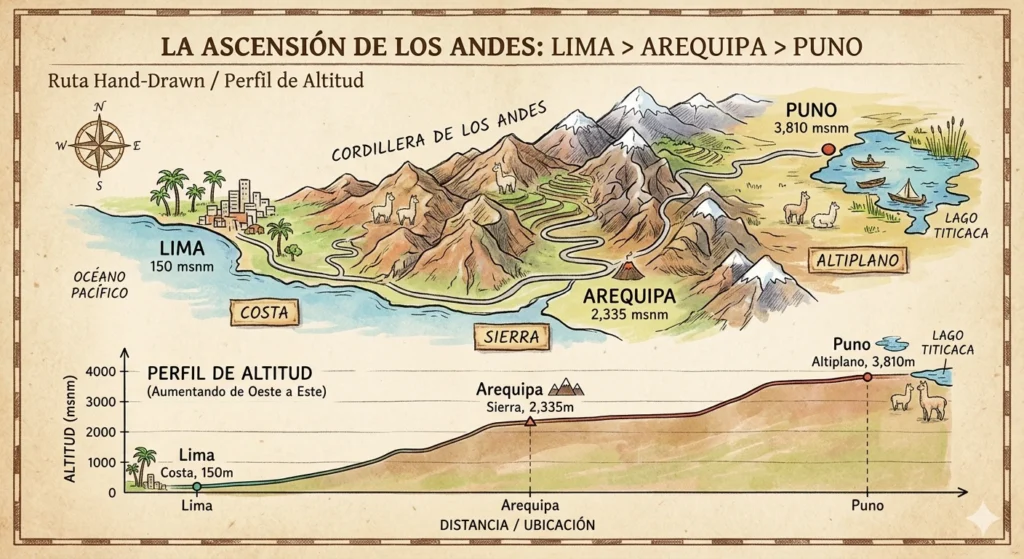
The best medical and natural way to avoid altitude sickness is take the route by land in an ascending direction. If you have enough days, this is the ideal order to avoid harming your body:
- Coastline (Sea Level): It begins in Lima, Paracas and Nasca.
- Arequipa (2,335 m above sea level): It's the perfect stopover. Spend a couple of days here; it's high enough to start acclimating your lungs, but altitude sickness is rare.
- Puno and Lake Titicaca (3,827 m above sea level): After visiting the Colca Canyon, you go up to Puno. Here the air is already thin, but since you're coming from Arequipa, the impact will be much less.
- Cusco (3,400 m above sea level): Interestingly, Cusco is lower than Puno! Arriving here after being at Lake Titicaca, you'll feel wonderful and full of energy to explore Machu Picchu.
5 Practical Tips to Overcome Altitude Sickness
If you're already at altitude, follow these commandments from day one:
- Take it easy: Take it easy for the first 24 hours. Don't rush around the plazas or plan any strenuous hikes on your first day in Cusco or Puno.
- The power of the Coca Leaf: The Incas used it for good reason. As soon as you arrive at your hotel, ask for a "mate de coca" (a hot infusion). You can also chew coca leaves or buy coca candies at any pharmacy.
- Extreme hydration: Drink much more water than you normally would. Altitude dehydrates your body quickly without you even realizing it.
- Light meals: At high altitude, digestion slows down considerably. Avoid heavy red meat or fatty foods for your first dinner. Opt for light soups, grilled chicken, or vegetables. And save the Pisco Sour for your second or third day!
- Altitude sickness pills: In all pharmacies in Peru, they sell over-the-counter medications, such as the famous "Sorojchi Pills." Many travelers take one before starting their ascent. (Note: Always consult your doctor before traveling if you have pre-existing conditions.).
Travel Safe and Without Medical Worries
As an official tour guide, I've seen hundreds of travelers struggle with altitude sickness. I know exactly what pace to maintain, where to make the right stops to acclimatize, and what to do if you feel a little dizzy.
In Adventure Tours Peru, We take your health very seriously. When you book our private transfers, you'll enjoy two exclusive advantages:
- Perfect acclimatization: We designed your route in the vehicle to gradually ascend, stopping at breathtaking viewpoints while your body adapts without stress.
- Oxygen on board: My tourist transport vehicles always have a first aid kit and portable oxygen tanks. If you feel short of breath on the way to Puno or Cusco, we provide you with immediate oxygen in the comfort of your seat.
Are you unsure about your fitness level for certain routes? Are you unsure how many days you need to acclimatize before climbing Rainbow Mountain? Feel free to write to me. I love answering these questions to ensure your trip to Peru is safe and enjoyable, whether or not you decide to take the tour with me.
👉 [WhatsApp Button/Link] Click here to send me a message. Let's talk about planning a safe route for you!